Freedom Was Only the Beginning
Durgabai's part in the national movement is real, documented and limited — one organiser among hundreds of thousands. This chapter places her inside the movement rather than at the head of it.
Where Gandhi actually enters the record
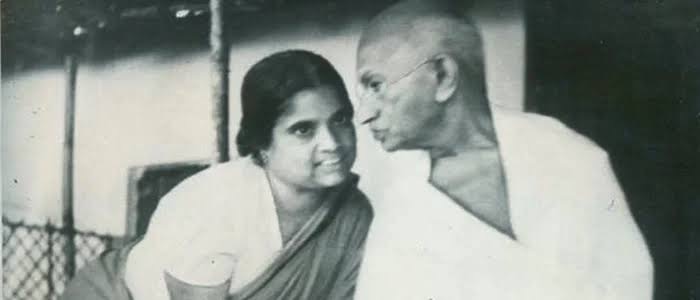
Gandhi's influence on her is not a matter of inference. She stated it herself, on the record, in the Constituent Assembly.
“Long before the Pandits of Hindi Sahitya Sammelan realised the importance of having a national language for India, we all in the South obeyed the call of Mahatma Gandhi and carried on Hindi propaganda in the South. We started schools and conducted classes in Hindi.”G. Durgabai, Constituent Assembly of India Debates, Vol. IX, 14 September 1949
A movement, not a biography
India's independence was not achieved by a handful of famous people. It was achieved by a very large number of organisers, most of whom are not named anywhere, working through an organisation — the Indian National Congress — that had district committees, volunteer corps, treasurers, printers and schools. Durgabai belonged to that apparatus in the Andhra districts of the Madras Presidency, and she was good at it.
Reading her as the heroine of the story would be both inaccurate and, in an odd way, unflattering. Her actual skill was collective: she could raise a volunteer corps, run an exhibition, keep a school going without money, and later persuade a government to fund something. Those are organisational talents, and they are the reason she was still useful to the country long after the movement she joined had dissolved into a state.
Non-cooperation, 1920–22
The Non-Cooperation movement asked Indians to withdraw from British institutions: titles, courts, councils, and schools. Durgabai, about twelve, left her school. Her response — teaching Hindi to girls at Kakinada from 1922 — belonged to the movement's constructive programme, the half of Gandhian politics concerned with building substitutes rather than staging refusals.
Hindi propaganda in the South was a specific Gandhian project, and an unpopular one. As her 1949 speech makes plain, southern workers took it up in the face of a strong regional counter-current, and she never forgot that they had done so voluntarily.
Civil disobedience and the salt satyagraha, 1930
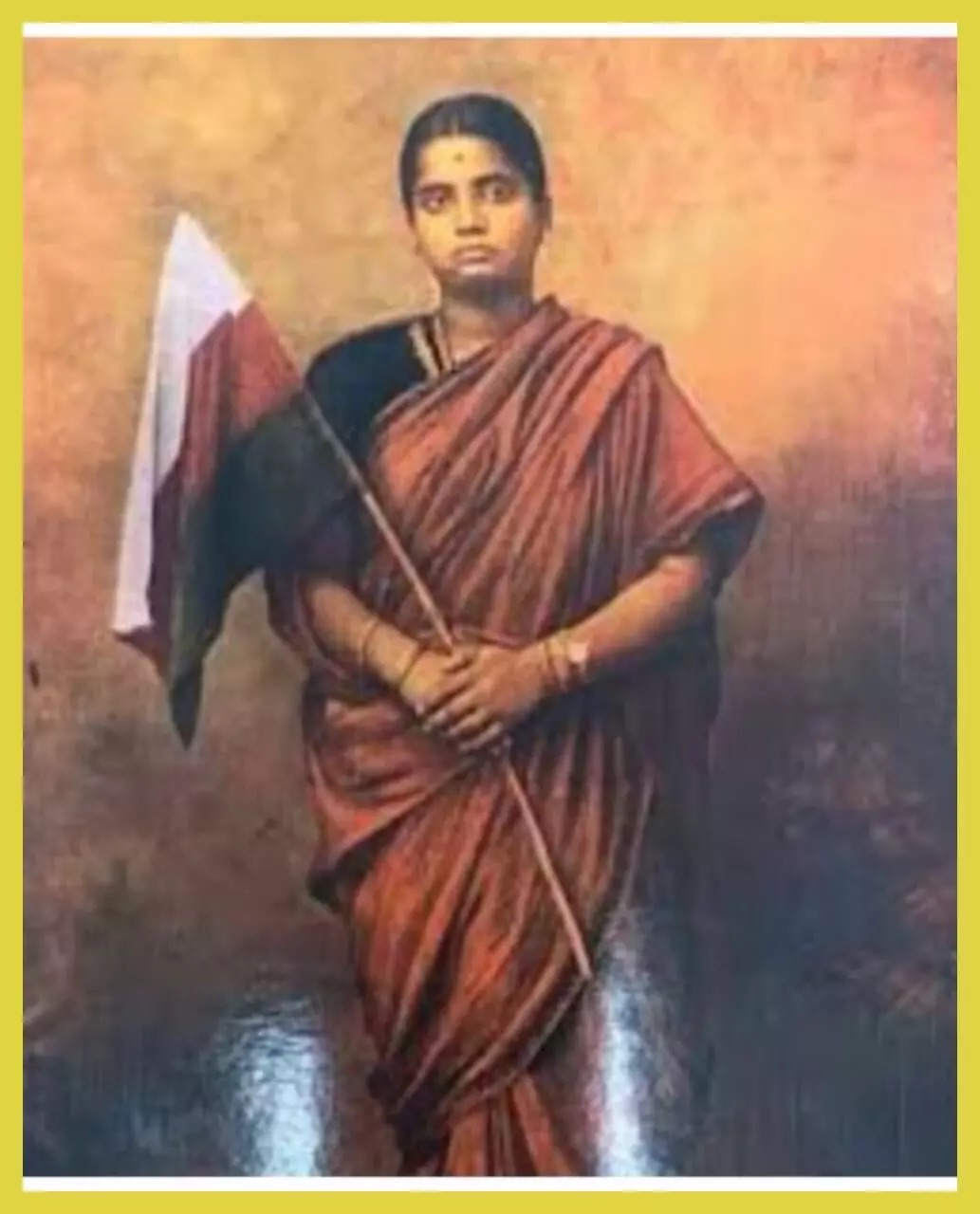
In March 1930 Gandhi walked to Dandi and made salt from seawater in deliberate breach of the salt laws. What followed was not one march but a national campaign, improvised in every province. In Madras, salt satyagraha was organised on the coast and in the city, and Durgabai was part of organising it. She took part in May 1930 and was arrested.
She was imprisoned in 1930 and again in 1932. Some accounts describe three terms between 1930 and 1933, and the length of the sentences is reported inconsistently; this site does not pick a number. What the sources agree on is that she served time, more than once, as an adult woman in her early twenties.
Prison in this period was not incidental to her education — it was part of it. She read and studied inside, and emerged determined to take the formal degrees she had given up at twelve. That thread is followed in Chapter 04.
What she was actually doing
Set out plainly, her contribution to the freedom movement was of four kinds, and none of them is dramatic:
- Constructive work. Running Hindi schools for girls and women from 1922, as part of the movement's own programme of building Indian alternatives.
- Organisation. Volunteering at and helping to run the 1923 Congress session at Kakinada, including its khadi exhibition — the movement's economic programme in physical form.
- Mobilising women. Bringing women into the 1930 civil disobedience campaign in the Madras Presidency, which meant persuading families as much as persuading recruits.
- Going to prison. Accepting arrest and imprisonment, which was the movement's central tactic and its central cost.
Nothing in the available record supports the stronger claims sometimes made for her in popular accounts — that she led the movement in the South, or that particular national decisions turned on her. This site does not repeat them.
Editorial composition
The woman in the movement
Between 1920 and 1947, hundreds of thousands of Indian women entered public political life for the first time. Understanding how that happened, and at what price, explains more about Durgabai Deshmukh than any account of her personally. She is best read here as a case study.
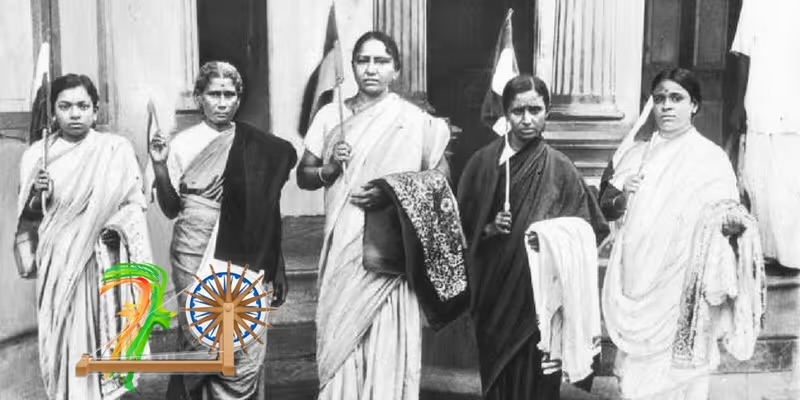
Gandhian methods needed enormous numbers of disciplined, non-violent volunteers for picketing, spinning, selling khadi, marching and courting arrest. Women could do all of it, and Gandhi explicitly recruited them, arguing that the work suited them and that the movement needed them.
It gave a woman a socially defensible reason to leave the house, travel, speak in public, handle money and give orders — framed not as personal ambition but as national duty. That framing did an enormous amount of practical work.
Girls were commonly married young — the Child Marriage Restraint Act dates only from 1929 — and female literacy was very low. Most women who wanted to take part needed the consent of a father, husband or brother, and could be stopped at any point without recourse.
Participation was therefore filtered: it fell disproportionately to widows, to unmarried women, to women from politically committed households, and to women who had somehow escaped the usual arrangements. Durgabai belonged to the last category.
Women satyagrahis were arrested and jailed in large numbers during the civil disobedience campaigns. Beyond the sentence itself there were lost years, damaged health, interrupted education, and families that had to absorb the loss of a member and the disapproval of neighbours.
Because it was a real price, the women who paid it acquired real standing. When independence came, a cohort existed who had run organisations, managed money and served sentences — and could not easily be told they were unqualified for public office.
Fifteen women sat in the Constituent Assembly of India, Durgabai among them, signing its register for Madras (General) on 9 December 1946. Others went into ministries, state legislatures, diplomacy and the new welfare administration.
It is a small number against 299 members, and it was not the product of any quota. It was the product of two decades of movement work that had trained these particular women and made them impossible to overlook. The next chapters follow what Durgabai did with that opening.
After 1947, the harder problem
The title of this chapter is meant literally. Independence settled the question of who governed India. It settled almost nothing about whether an Indian girl would go to school, whether a poor woman could get legal advice, whether a village had a health centre, or whether a destitute child had any claim on the state at all.
Durgabai spent the next thirty-four years on exactly those questions. She would argue in the Constituent Assembly that a right without a remedy is worthless; she would sit on the Planning Commission and insist that social services belong in a national plan; and she would spend decades building the organisations that had to do the actual work.